
Summary: Confused about radial tyres vs normal tyres? This guide breaks down how each type is built, how they perform on Indian roads, and which delivers better value for your riding style. You will find a complete side-by-side comparison covering grip, comfort, fuel efficiency, durability, and cost, plus clear buying advice.
Your motorcycle's tyres connect you to the road, yet most riders never question what is inside them.
Understanding the difference between radial tyre and normal tyre construction helps you make smarter purchasing decisions.
Here is the quick answer: radial tyres deliver superior grip and fuel efficiency for highway riding, while bias (normal) tyres handle rough roads and heavy loads better. The right choice depends entirely on how and where you ride.
The core distinction between radial vs non-radial tyre options lies beneath the rubber surface. Radial tyres have reinforcing cords laid at a 90-degree angle to the direction of travel, running straight from bead to bead.
Steel, nylon, or Kevlar belts sit between these radial plies and the tread, creating two independent zones: a flexible sidewall and a stable tread area.
Bias-ply tyres (commonly called "normal" or "cross-ply" tyres) use a completely different approach. Their reinforcing cords run diagonally at 30 to 40 degree angles from bead to bead.
Each additional ply crosses the previous one at an opposing angle, creating a criss-cross pattern. Most bias tyres feature four layers of these fabric cords, though heavy-duty versions may have six, eight, or even ten plies.
This structural difference creates distinct performance characteristics. Radial tyres' flexible sidewalls and rigid tread belt produce a larger, more stable contact patch with the road. Your tyre maintains consistent grip even when cornering at speed.
Bias tyres' unified criss-cross structure makes the entire tyre stiffer, which handles sharp impacts and heavy loads more effectively but sacrifices high-speed stability.
| Feature | Radial Tyres | Bias (Normal) Tyres |
|---|---|---|
| Cord angle | 90° to travel direction | 30° to 40° diagonal |
| Sidewall flexibility | Soft and flexible | Stiff and rigid |
| Belt material | Steel, nylon, or Kevlar | Rubber-coated fabric plies |
| Contact patch | Wider, flatter | Shorter, narrower |
| Typical lifespan | Approximately 7 years | Approximately 5 years |
| Cost difference | 10% to 15% higher | More economical |
Performance depends heavily on your riding environment. Indian roads throw everything at you: potholes, uneven tarmac, gravel patches, speed breakers, and sudden surface changes. Each tyre type handles these challenges differently.
Radial tyres excel when:
Bias tyres work better when:
Radial tyres deliver measurably better fuel economy due to lower rolling resistance. The engine works less to propel your bike forward, translating to real savings at the pump.
Over thousands of kilometres, this efficiency advantage can offset the higher purchase price. Bias tyres generate more friction and heat, consuming slightly more fuel, particularly during extended highway rides.
Heat management also affects longevity. Radial tyres dissipate heat more effectively through their steel belt construction, running cooler even under sustained load. Bias tyres retain heat, which accelerates wear. This explains why radials typically last around seven years while bias tyres average five years under similar conditions.
Comfort trade-offs exist, too. Radial tyres feel noticeably smoother on well-maintained roads because their flexible sidewalls absorb road imperfections. However, on broken surfaces with sharp bumps, that same flexibility can transmit more vibration. Bias tyres' rigid construction absorbs sharp impacts better, making them surprisingly comfortable on genuinely rough terrain.
Choose based on your actual riding patterns, not marketing promises. If you commute on city streets with your manufacturer-recommended bias tyres, switching to radials may not improve your experience and could alter your bike's handling characteristics. Always check your owner's manual before changing tyre types.
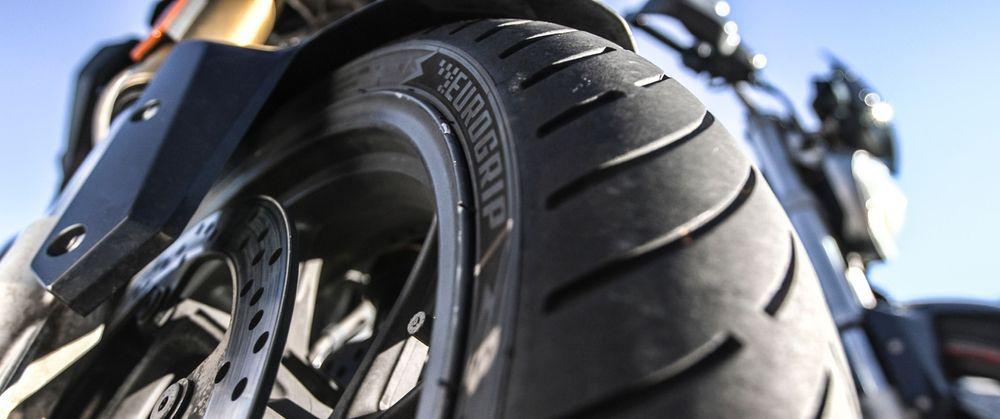
For riders seeking radial performance, Eurogrip's radial tyre range incorporates Dual Tread Compound Technology (DuCT), where the outer layer delivers superior grip while the inner layer bonds securely with the reinforcement structure. Their Roll Balanced Unique Tyre Construction (RoBusT) optimises the design for confident, safe cornering at higher speeds.
Quick decision guide:
Never mix radial and bias tyres on the same motorcycle. This combination creates unpredictable handling and uneven wear patterns that compromise your safety. Explore Eurogrip's radial options to find tyres engineered specifically for Indian highway conditions with the grip and durability serious riders demand.
Check the sidewall markings just below the tyre size. Radial tyres display "RADIAL" or the letter "R" in the size code. Bias tyres show "BIAS PLY" or use a dash in the size format instead of an R.
For highway riders covering long distances, yes. The 10% to 15% price premium delivers better fuel efficiency, longer lifespan, and superior high-speed grip. City commuters on short trips may not see enough benefit to justify the cost.
No. Motorcycles are designed with specific suspension geometry for either radial or bias tyres. Installing radials on a bike engineered for bias tyres changes handling characteristics and may compromise safety. Follow your manufacturer's recommendations.
Not necessarily. Radial tyres' flexible sidewalls absorb gradual undulations well but can transmit sharp impacts more harshly. Bias tyres' rigid construction often handles sudden potholes and broken edges more comfortably.
Commuter motorcycles prioritise affordability, load capacity, and durability over high-speed performance. Bias tyres meet these requirements at a lower price point and handle India's varied road conditions adequately for city speeds.