
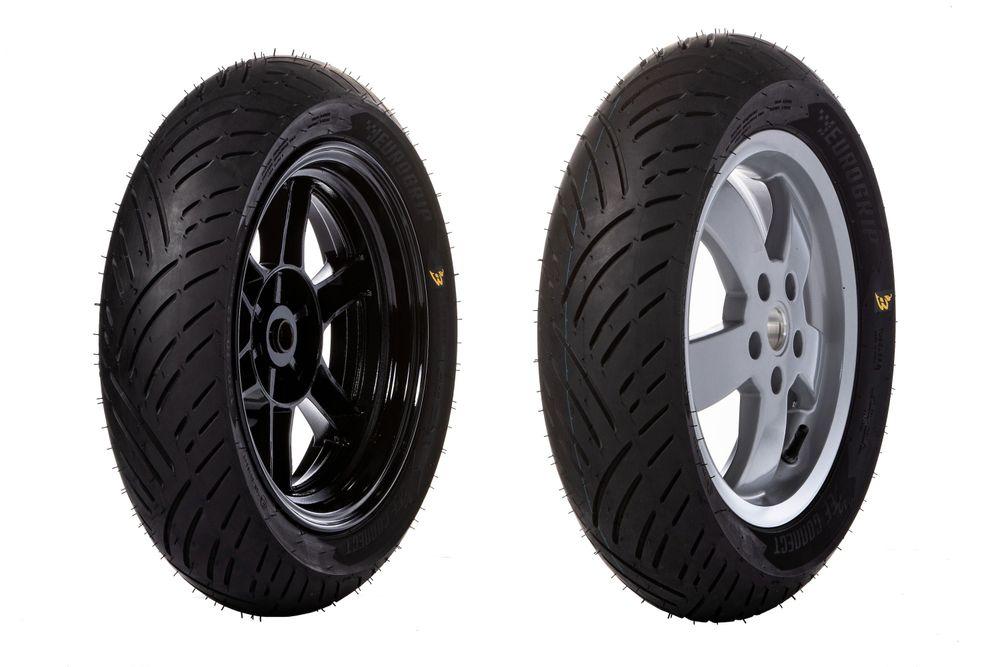
Understanding bike tyre price variations helps you make smarter purchasing decisions. This guide breaks down the key factors that influence tyre costs, from size and construction type to brand positioning and intended use. You will learn why a scooter tyre costs ₹900 while a sports bike tyre can exceed ₹8,000.
A 90/90-17 rear tyre for your 125cc commuter costs around ₹1,200 to ₹1,800. Step up to an 180/55 R17 for a sports bike, and you are looking at ₹5,000 to ₹8,500. That is a price difference of nearly 400%. Understanding what drives bike tyre price helps you spend wisely without compromising safety or performance. Four major factors determine what you pay: size, construction, materials, and brand positioning.
Size is the most straightforward price driver. Wider, larger tyres use more raw materials and require more complex manufacturing processes. A 110/70-17 front tyre for a 200cc motorcycle costs ₹1,800 to ₹2,800, while smaller scooter-fitments start at ₹900.
Natural rubber, carbon black, and nylon tyre cord constitute 60% of the total manufacturing cost. When global rubber prices fluctuate due to weather conditions or supply chain disruptions, retail prices follow.
Construction type creates the next major price split. Tubeless motorcycle tyres typically cost ₹300 to ₹400 more than tube-type equivalents, but they offer safer puncture management. The bigger jump comes between bias-ply and radial construction.
Radial tyres cost ₹500 to ₹900 more than bias-ply alternatives. They deliver better high-speed stability, improved heat dissipation, and superior highway comfort. Motorcycles above 300cc increasingly prefer radial construction for these exact reasons.
| Price Factor | Impact on Cost | Example |
|---|---|---|
| Tyre size | ₹300 to ₹2,000+ increase per size category | 90/90-17 vs 180/55 R17 |
| Tubeless vs tube-type | ₹300 to ₹400 premium | Commuter segment |
| Radial vs bias-ply | ₹500 to ₹900 premium | Performance segment |
| Premium brand markup | 15% to 40% over domestic brands | Michelin vs MRF |
Speed rating and load index also affect pricing. Higher speed ratings require compounds that maintain grip at elevated temperatures, while higher load indices demand reinforced carcass construction. Both add to manufacturing complexity and material costs.
Your riding purpose determines which technology you need, and technology costs money. Budget-friendly motorcycle tyres in the ₹1,000 to ₹2,500 range suit daily commuting on city roads. Mid-range options between ₹2,500 and ₹4,000 offer better grip, longer tread life, and improved wet-weather performance. Premium sport tyres exceeding ₹4,000 feature advanced compounds, aggressive tread patterns, and construction optimised for cornering grip.
Consider this breakdown for commuter motorcycles (100cc to 150cc): tube-type tyres range from ₹1,100 to ₹1,500, while tubeless versions run ₹1,400 to ₹1,900. Basic performance tyres cost ₹1,800 to ₹2,800. Radial tyres jump to ₹2,500 to ₹4,000, and premium sport tyres climb to ₹4,000 to ₹7,000 or higher.
Brand positioning creates significant price gaps even within identical size categories. MRF, CEAT, Apollo, and JK Tyre occupy the mass-market segment. Bridgestone, Michelin, Continental, and Pirelli command premiums of 15% to 40% for comparable sizes. The most expensive CEAT bike tyre reaches ₹15,210, while their entry-level option starts at ₹660. MRF spans ₹770 to ₹12,230 across their range.
Foreign brands carry additional cost burdens that translate to higher retail prices:
Import duties, surcharges, and GST add to the final sticker price.
Shipping fees, insurance, and handling expenses increase landed costs.
Building distribution networks in India requires significant investment.
Certification and compliance with Indian regulations mean spending on testing and inspections.
Currency fluctuations add financial risk that manufacturers factor into pricing.
Domestic manufacturers benefit from established supply chains, existing dealer networks, and lower logistics costs. They pass these savings to consumers. Eurogrip Protorq and Roadhound ranges are typically priced ₹200 to ₹500 below MRF for comparable sizes, offering strong value in the performance segment.
Premium tyres often deliver longer tread life, offsetting their higher upfront cost. Mass-market motorcycle tyres typically last 25,000 to 40,000 km depending on riding style and road conditions. Premium brands can stretch this to 40,000 to 50,000 km. Rear tyres wear faster than front tyres due to drive forces, so factor this into your replacement planning.
Calculate cost per kilometre rather than staring at the sticker price. A ₹2,000 tyre lasting 25,000 km costs 8 paise per kilometre. A ₹3,500 tyre lasting 45,000 km costs 7.7 paise per kilometre. The expensive tyre actually costs less over its lifetime.
| Segment | Price Range | Typical Lifespan | Cost per 1,000 km |
|---|---|---|---|
| Budget | ₹1,000 to ₹2,500 | 20,000 to 30,000 km | ₹50 to ₹83 |
| Mid-range | ₹2,500 to ₹4,000 | 30,000 to 40,000 km | ₹62 to ₹100 |
| Premium | ₹4,000 to ₹8,000+ | 35,000 to 50,000 km | ₹80 to ₹160 |
Match your tyre choice to your actual riding needs. Commuters covering 50 km daily on city roads need durability and puncture resistance over outright grip. Weekend riders pushing through twisties benefit from premium compounds that maintain traction through corners. Touring riders logging highway kilometres should prioritise stability and heat resistance.
The Indian two-wheeler tyre market reached 123.5 million units in FY 2025, valued at 2.85 billion USD. This scale means you have excellent choices across every bike tyre price segment. Research specific models, read user reviews, and compare cost-per-kilometre rather than upfront price alone.
Eurogrip's Tri Polymer Tread Compound (TriP) technology, featuring advanced high-structure carbon formulation, balances grip, mileage, and durability. This approach delivers performance riders expect without premium pricing. Explore Eurogrip's range to find options that match your riding style and budget.
Why do sports bike tyres cost so much more than commuter tyres?
Sports bike tyres use larger sizes (150/60 R17 or 180/55 R17), radial construction, and advanced compounds designed for high-speed grip. These materials and engineering costs multiply the final price. A sports bike tyre at ₹5,000 to ₹8,500 represents genuine performance investment.
Are tubeless tyres worth the extra cost?
Yes, for most riders. Tubeless motorcycle tyres cost ₹300 to ₹400 more but offer safer puncture management. You can often ride to a repair shop on a slowly deflating tubeless tyre, while a tube-type puncture means immediate deflation.
How much should I budget for scooter tyres?
Basic scooter tyres run ₹900 to ₹1,300. Mid-range options with better grip and longer life cost ₹1,300 to ₹1,800. Premium scooter tyres with improved wet performance reach ₹1,500 to ₹2,000 or more.
Do foreign brand tyres justify their higher price?
Sometimes. Premium brands like Michelin and Pirelli often deliver longer tread life and advanced technology. However, domestic brands offer strong value, and the 15% to 40% premium gap does not always translate to proportional performance gains.
When should I replace my bike tyres?
Replace tyres when tread depth reaches 1.6 mm, or after five years from the manufacturing date, whichever comes first. Most bike tyres last 25,000 to 40,000 km depending on riding style, with rear tyres wearing faster than front.