
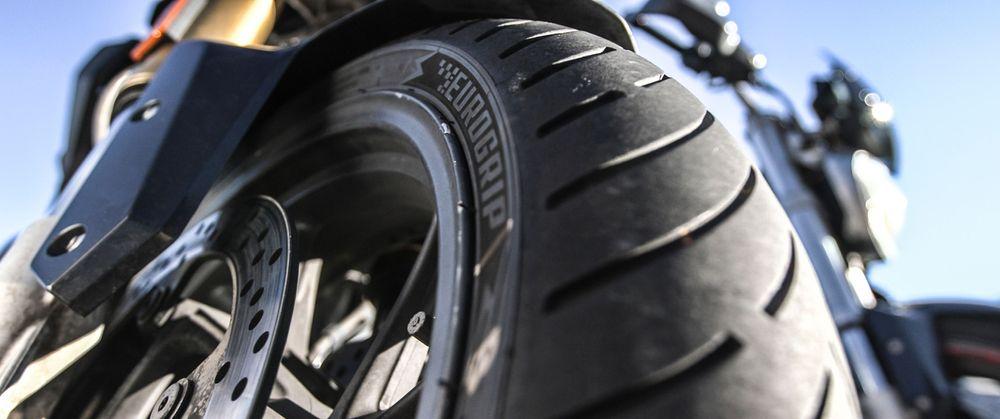
Summary: Indian roads put your tyres through punishment that riders in other countries rarely experience. This guide breaks down the specific tyre damage types caused by potholes, explains sidewall strength and ply ratings in plain language, and gives you practical strategies to extend your tyre life on India's challenging roads.
Every monsoon season, you watch potholes multiply across your daily commute. That crater you dodged yesterday has grown deeper today. The average Indian rider experiences 2 to 4 punctures per year. Understanding how these road hazards cause specific tyre damage types helps you make smarter choices about protection and prevention.
When your wheel drops into a pothole, the tyre is compressed between the road and the rim. This violent, concentrated impact creates damage you might not see immediately. The sidewall, the most vulnerable part of your tyre, absorbs force it was never designed to handle.
Tyre sidewall damage occurs when this crushing action tears the internal structure. You might notice a visible bulge forming on the sidewall within days. That bulge signals internal belt separation, and no repair can fix it. The tyre must be replaced entirely.
Higher speeds increase the risk of losing control after hitting a pothole. Even if you avoid a crash, the damage accumulates. Here is a breakdown of common tyre damage types from potholes:
| Damage Type | What You See | Can It Be Repaired? | Typical Cost |
|---|---|---|---|
| Sidewall bulge | Visible bump on sidewall | No, requires replacement | ₹1,200 to ₹4,500 |
| Tread puncture | Slow air loss, visible nail | Yes, if in tread area | ₹100 to ₹200 |
| Internal belt damage | Tyre feels unbalanced | No, requires replacement | ₹1,200 to ₹4,500 |
| Pinch flat (tube-type) | Sudden complete deflation | Sometimes, often needs new tube | ₹200 to ₹500 |
| Bead damage | Air leaks from rim edge | No, requires replacement | ₹1,200 to ₹4,500 |
Riding on a flat tyre, even for a short distance, can damage the tyre and rim. A ₹100 repair becomes a ₹3,000 bill.
Your tyre's ability to survive Indian road conditions depends heavily on its internal construction. Ply rating refers to the number of reinforcement layers inside the tyre. More layers mean a stiffer, more impact-resistant sidewall.
Think of ply layers like the walls of a building. A single-layer wall cracks under pressure. A two-ply construction distributes impact force across multiple layers, reducing the chance of structural failure. Tyres designed for Indian roads often use high modulus low shrinkage ply material, which maintains its strength even after thousands of kilometres of abuse.
Puncture prevention starts with understanding what makes a tyre tough:
Eurogrip's DrBond (Dry Bonding Reinforcement Technology) addresses exactly this challenge. The specially developed nylon reinforcement bonding system creates high adhesion between rubber and nylon layers. Your tyre remains durable and safe even after a lifetime of pothole encounters.
For riders facing particularly brutal road conditions, Eurogrip Jumbo and Remora tyres offer the pothole-tough construction you need. The RoBusT (Roll Balanced Unique Tyre Construction) design optimises the tyre structure for superior cornering and impact resistance, while the D²T (Deep Design Tread) technology provides high tread rubber volume for extended life.
Maintaining correct tyre pressure prevents 40 to 50% of punctures. For bikes, recommended pressure typically runs 28 to 32 PSI front and 32 to 36 PSI rear. Check weekly, because pressure changes with temperature and usage.
| Maintenance Action | Frequency | Benefit |
|---|---|---|
| Pressure check | Weekly | Prevents 40 to 50% of punctures |
| Visual inspection | After rough rides | Catches cuts and bulges early |
| Tread depth check | Monthly | Ensures minimum 1.5mm depth |
| Wheel alignment | Every 8,000 to 10,000 km | Prevents uneven wear |
| Tyre rotation | Every 8,000 to 10,000 km | Distributes wear evenly |
Protecting your tyres from tyre sidewall damage requires a combination of smart riding and proper equipment choices. Slow down when approaching potholes or uneven surfaces. This single habit significantly reduces damage. Avoid tailgating so you can spot hazards early.
During monsoons, drive slowly on wet roads. Water-filled potholes make depth judgment impossible, and that innocent-looking puddle might hide a rim-destroying crater. If you cannot avoid a pothole, hit it straight-on at reduced speed rather than at an angle.
Consider upgrading to tubeless tyres if you still run tube-type. Tubeless tyres deflate slowly after a puncture, giving you time to reach a repair shop. They eliminate pinch flats entirely and can often be ridden 1 to 3 km at low speed after a puncture.
Eurogrip's range of pothole-resistant tyres, including the Jumbo for commuters and Remora for scooters, combines reinforced construction with technologies like TriP (Tri-Polymer Tread Compound) for balanced grip, mileage, and durability. Explore the full range at Eurogrip to find tyres engineered specifically for Indian roads.
How do I know if pothole damage requires tyre replacement?
Replace your tyre immediately if you see sidewall bulges, cuts longer than 10mm, visible cords, or multiple punctures within 5cm of each other. Sidewall damage cannot be repaired because the sidewall flexes constantly during riding, and patches will not hold.
Can I prevent punctures from potholes entirely?
Complete puncture prevention is impossible on Indian roads, but you can reduce risk by 40 to 50% through proper tyre pressure maintenance. Weekly pressure checks, avoiding construction zones, and choosing tyres with reinforced sidewalls all help significantly.
What is the minimum safe tread depth for Indian roads?
Replace your tyres when tread depth reaches 1.5mm. Shallow tread offers less protection against penetration from debris hidden in potholes. Even if a punctured tyre can technically be repaired, replace it if tread depth is already near this limit.
Are tubeless tyres better for pothole-prone areas?
Yes. In some cases, tubeless tyres lose air more gradually, giving you time to reach a nearby repair shop safely. Tubeless conversion costs ₹1,500 to ₹8,000 but saves ₹500 to ₹1,500 annually in puncture repairs.
How often should I inspect my tyres for pothole damage?
Run your hand around the tread surface after every long ride to feel for embedded nails, screws, or glass. Conduct a visual inspection of sidewalls after riding on rough roads. Remove debris before it penetrates deeper into the tyre structure.