
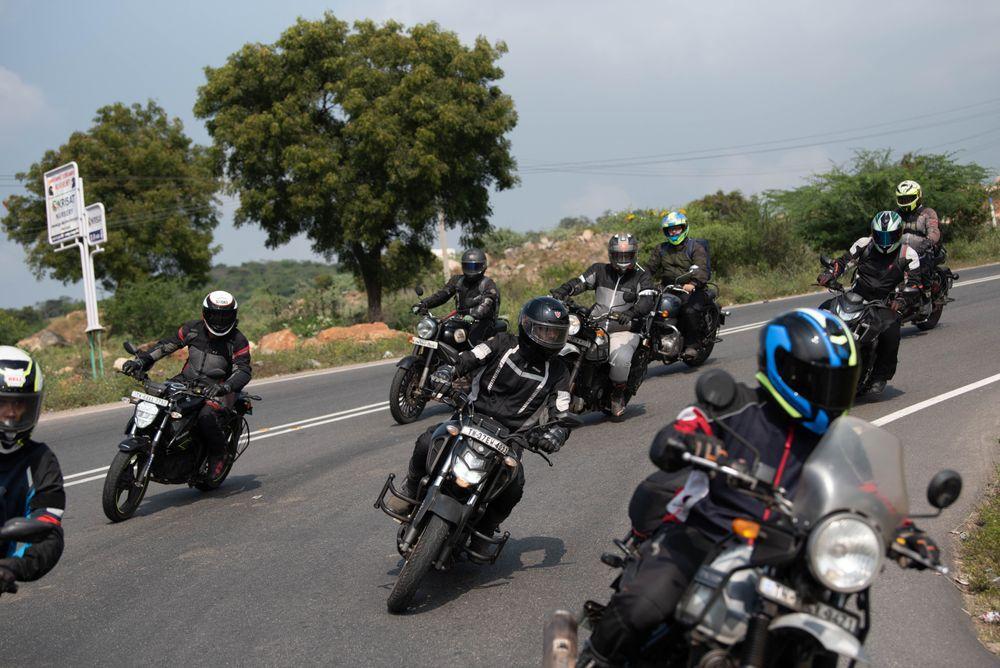
A proper bike ride checklist prevents breakdowns and keeps you safe on long journeys home. This guide covers essential vehicle checks, tyre inspection, document verification, and emergency kit preparation. You will learn exactly what to inspect, what to pack, and how to plan your route for a smooth ride across Indian highways.
Your bike has carried you through daily commutes all year. Now it faces a 500 km journey home for the festival. A 30-minute inspection the day before departure can prevent 70 per cent of roadside issues.
This bike ride checklist walks you through every critical check, from tyre pressure to emergency contacts. Follow it methodically, and you will ride with confidence instead of anxiety.
Start your bike road trip checklist with the engine cold and the bike on its centre stand. Check the engine oil level at the full mark, looking for an amber colour. If your next service falls within 500 km of your journey distance, get the oil changed now. For liquid-cooled bikes, verify coolant sits between the MIN and MAX markers with a bright, clean colour.
Your brakes need brake pads measuring at least 3 mm thick. The front lever should feel firm when squeezed, not spongy. A spongy feel means air in the brake fluid or low fluid level. For rear drum brakes, check for 10 to 15 mm of free play before engagement.
Chain slack matters enormously on long rides. Measure 25 to 30 mm of vertical movement at the chain's midpoint. Clean the chain with kerosene, then apply fresh lubricant to the lower run. Inspect sprocket teeth for hooked or shark-fin shapes that indicate wear.
Battery terminals should be clean and corrosion-free. A healthy battery reads 12.4V or higher. Test all lights systematically: low beam, high beam, tail light, brake light, indicators, and hazard flashers. A burnt bulb at night on a national highway puts you in serious danger.
| Component | Minimum Spec | Warning Signs |
|---|---|---|
| Brake pads | 3 mm thick | Squealing, spongy lever |
| Chain slack | 25 to 30 mm | Tight spots, rust, noise |
| Battery voltage | 12.4V+ | Slow cranking, dim lights |
| Tyre tread | 2 mm depth | Visible wear indicators |
| Engine oil | Full mark | Dark colour, gritty texture |
Check clutch and throttle cables for smooth movement and frayed strands. Inspect the air filter and clean or replace it if oil-soaked or clogged. Finally, verify handlebar clamps, foot pegs, and engine mount bolts are properly torqued.
Tyres connect your entire machine to the road surface. Every braking, cornering, and acceleration force passes through two contact patches smaller than your palms. On a 600 km highway run, compromised tyres face thousands of stress cycles, heat build-up, and varied road surfaces. A tyre failure at 80 km/h gives you almost no reaction time.
Begin with tread depth. The legal minimum is 1.6 mm, but for long-distance safety, maintain at least 2 mm. Look for the tread wear indicators (small raised bars inside the main grooves). If your tread surface is level with these bars, replace the tyre before your journey.
Inspect the entire tyre surface for these issues:
Run your hands along both tyres, feeling for embedded stones, glass, or nails. A slow puncture from a small nail can become a blowout at sustained highway speeds.
Check pressure with tyres cold, before riding. Your vehicle manufacturer specifies pressure values on a sticker (usually on the swingarm or under the seat). These specifications assume a solo rider without luggage.
When carrying a pillion passenger or heavy luggage, increase rear tyre pressure by 2 to 4 PSI above the standard recommendation. This compensates for additional load and prevents excessive flexing. Overloaded tyres running at standard pressure heat up faster and wear unevenly.
Invest in a handheld pressure gauge rather than relying on petrol pump gauges, which are often inaccurate. Check pressure every morning during multi-day rides. Overnight temperature drops can reduce pressure, and altitude changes affect readings too.
Quality tyres engineered for Indian conditions make a measurable difference on long journeys. Eurogrip tyres feature optimised tread pattern design technology that distributes footprint pressure evenly across the contact patch.
This engineering delivers consistent grip in both dry and wet conditions, precisely what you need when covering 400 km of varied terrain in a single day.
A roadworthy bike means nothing if you are stranded without documents at a checkpoint. Collect your driving licence, registration certificate, insurance papers, and PUC certificate. Verify your insurance is active, not just present. Laminate photocopies as backup. Save the originals in a waterproof pouch.
Plan your fuel stops before departure. Some highway stretches have no pumps for 100 km or more. Refuel whenever you drop below a quarter tank, regardless of remaining range. Your bike's mileage drops 15 to 20 percent when fully loaded, so recalculate your real-world range accordingly.
Check weather forecasts for your entire route. Monsoon riding demands waterproof gear and 20 to 30 percent slower speeds since braking distances double on wet roads. Download offline maps for every state on your route; each state consumes 200 to 400 MB of storage.
Emergency kit essentials:
Save critical numbers in your phone: National Highway Helpline (1033), Police (112), and your insurance roadside assistance line. Cap daily riding at 400 to 500 km on highways, stopping every two hours for 10 to 15 minutes. Start early, finish by 5 pm, and never ride tired.
Your bike road trip checklist is complete. A thorough inspection, proper tyre care, and smart planning transform a stressful journey into an enjoyable ride. Check out Eurogrip's range of high-performance tyres designed specifically for Indian roads and riding conditions.
How far in advance should I service my bike before a long trip?
Get your bike serviced two to three weeks before departure. This gives time to break in new parts and address any issues that surface during the first few rides after servicing.
What tyre pressure should I use when carrying a pillion and luggage?
Increase rear tyre pressure by 2 to 4 PSI above the manufacturer's standard recommendation. Check the sticker on your bike for the exact loaded pressure specification.
How often should I stop during a long highway ride?
Stop every two hours for 10 to 15 minutes. Get off the bike, hydrate, stretch your muscles, and check your tyres and chain. This prevents fatigue and catches developing problems early.
Can I ride through waterlogged roads during monsoon?
Avoid water deeper than your engine casing. Water entering the air intake can hydrolock your engine, causing severe damage. If you must cross, maintain steady throttle and avoid stopping mid-stream.
What documents do I legally need to carry while riding?
Carry your original driving licence, registration certificate, valid insurance policy, and PUC certificate. Keep them in a waterproof pouch and save digital copies on your phone as backup.