
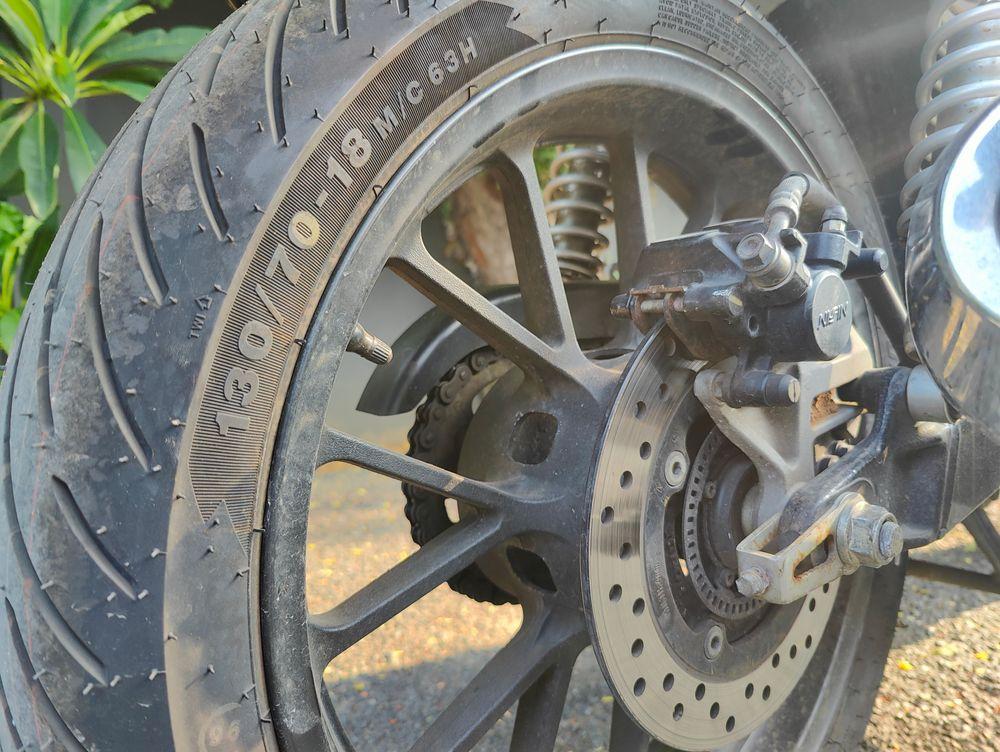
Your motorcycle's tyre manufacturing date sits hidden on the sidewall, waiting for you to decode it. Those four mysterious digits hold the key to your tyre's actual age: information that could save your life on the road. Most riders cruise along unaware that their tyres have a birthday stamped right on them, and checking this date takes less time than brewing your morning coffee.
Every tyre tells its own story through a simple code that reveals when it rolled off the production line. You'll find that this crucial information matters more than you might think. Research shows that only 4% of riders actually know about tyre ageing dangers, a statistic that emerged after several high-profile accidents caused by old, deteriorating tyres.
Checking your bike's manufacturing date is different from checking its tyre's manufacturing date. Your bike's manufacturing date tells you when the motorcycle was produced and can typically be verified through its Vehicle Identification Number (VIN) or manufacturer records. In contrast, the tyre manufacturing date indicates when the tyre itself was produced, which you can identify using the date code printed on its sidewall.
If you're wondering how to check bike tyre manufacturing date, the process involves locating and decoding a four-digit code that reveals the tyre's manufacturing week and year. Unlike your motorcycle's production date, the tire manufacture date helps you understand the age of your tyres and assess potential ageing-related safety concerns.
Before you start searching for those vital numbers, you need to understand why checking your bike tyre manufacturing date deserves your attention. Tyres deteriorate over time, regardless of how often you ride or how much tread remains.
Your tyres face constant battles against time and elements. Rubber compounds break down naturally through oxidation, causing microscopic cracks that compromise structural integrity. Even pristine-looking tyres stored in perfect conditions lose their flexibility and grip after several years.
Key ageing effects include:
Temperature fluctuations, UV exposure, and humidity accelerate these processes. A six-year-old tyre might look fine externally, but it performs significantly worse than a fresh one. Most manufacturers recommend replacing tyres after six years from the tyre manufacturing date, regardless of tread depth or visual appearance.
Insurance companies often scrutinise tyre ages after accidents. Using tyres beyond recommended lifespans could affect your claim validity. Professional mechanics regularly check bike tyre manufacturing date codes during inspections, flagging tyres approaching their expiry threshold.
Consider these safety statistics:
Finding your answer to ‘how to check bike tyre manufacturing date’ requires knowing exactly where manufacturers place these codes. Every tyre features this information, though locations vary slightly between brands.
Start your search on the outer sidewall, scanning the area near the rim. Look for markings beginning with "DOT" (Department of Transportation) or "BIS" (Bureau of Indian Standards) for Indian-manufactured tyres. These prefixes signal you're close to the date code.
Common date code locations:
Sometimes you'll need to check both sidewalls, as manufacturers occasionally print codes on one side only. Crouch down, use good lighting, and rotate the wheel slowly for better visibility. The code appears as raised or recessed characters moulded into the rubber.
Among various numbers and letters on your tyre, the tyre manufacturing date follows a specific format. After the DOT or BIS prefix, you'll see a series of characters ending with four digits – these final four numbers reveal your tyre's birthday.
Complete code example breakdown:
Code Component | Example | Meaning |
Prefix | DOT/BIS | Regulatory approval |
Plant Code | FT | Manufacturing facility |
Size Code | 8A | Production line identifier |
Optional Code | 05VX | Batch/shift information |
Date Code | 3421 | Week 34, Year 2021 |
You've found the code – now let's crack it. The bike tyre manufacturing date uses a straightforward WWYY format that tells you exactly when your tyre came to life.
The four-digit code splits into two parts:
This system accounts for occasional 53-week years while maintaining consistency across all tyre brands globally. Whether checking MRF, Apollo, CEAT, or Eurogrip tyres, the decoding method remains identical.
Quick reference decoding table:
Date Code | Week | Year | Approximate Month |
0522 | 05 | 2022 | Early February |
2419 | 24 | 2019 | Mid-June |
4320 | 43 | 2020 | Late October |
5118 | 51 | 2018 | Mid-December |
Understanding which month your tyre was manufactured helps track its age more intuitively. Divide the week number by 4.3 (average weeks per month) for a rough monthly estimate.
Month conversion guide:
Knowing your tire manufacture date means nothing without understanding what to do with this information. Let's determine whether your tyres remain roadworthy.
Simple mathematics reveals your tyre's exact age:
Example calculation:
Industry guidelines suggest replacing motorcycle tyres at six years, regardless of visual condition or remaining tread depth. Eurogrip's advanced compound technologies, like TriP (Tri Polymer Tread Compound), help maintain performance longer, but age limits still apply for safety.
While your bike tyre's manufacturing date provides crucial age information, combine this knowledge with physical inspection for a complete assessment.
Critical inspection points:
Tread depth measurements:
Surface condition checks:
Performance indicators:
Your tyre manufacturing date check is complete; you must now decide your next steps. Smart decisions here protect both your safety and wallet.
Replace tyres immediately when:
Consider replacement scheduling based on usage patterns. Heavy riders or those covering significant distances might replace tyres before the six-year mark. Weekend riders storing bikes properly might extend slightly beyond, though never past ten years.
Modern tyre technologies offer impressive longevity improvements. Eurogrip's DuCT (Dual Tread Compound Technology) provides superior mileage while maintaining grip throughout the tyre's lifespan. Their OpT-PaD (Optimised Tread Pattern Design) ensures even wear distribution, maximising safe usage periods.
Checking your bike tyre manufacturing date takes three simple steps that could prevent dangerous situations on the road. You now possess the knowledge to locate, decode, and act upon this vital safety information. Regular date checks, combined with visual inspections, keep you rolling mile after mile safely.
Eurogrip tyres excel with DrBond reinforcement for lasting durability and A-SeT technology for sustained pressure and safety. Make date checks routine every six months. Upgrade to Eurogrip today for superior protection and endless safe rides.
How do I check my bike's manufacturing date?
Check your motorcycle's VIN on the frame and verify its manufacturing date through manufacturer records or authorised dealerships.
How do I read the tyre manufacturing date code?
Locate the four-digit code on the tyre sidewall; the first two digits indicate week, last two indicate year.
Why does the tyre manufacturing date matter?
The manufacturing date helps determine tyre age, identify potential rubber deterioration, and ensure safer riding through timely replacement.
Where is the manufacturing date printed on a bike tyre?
The manufacturing date appears on the tyre sidewall, usually near DOT markings, represented by a four-digit production code.