
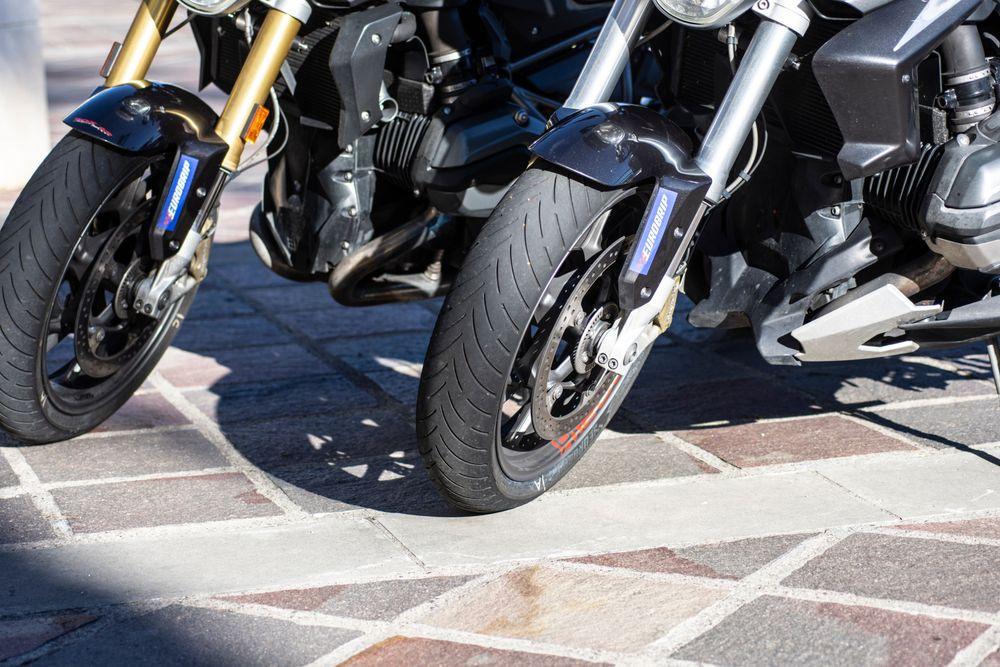
Eurogrip's Trailhound series offers two distinct adventure tyres for different riding styles. The Trailhound STR targets sport-touring riders on medium to large ADVs, while the SCR suits scrambler and entry-level adventure riders. This comparison breaks down their construction, intended use, and real-world performance to help you choose the right rubber for your next journey.
You have probably spotted the Trailhound name at your local dealer and wondered which variant belongs on your bike. The Trailhound STR delivers 90% road focus for highway-devouring ADVs, while the SCR balances 80% road with 20% off-road capability for scramblers and smaller adventure machines. Both share Eurogrip's zero-degree steel belt technology, yet they serve distinctly different riders. Let us examine what separates them.
The fundamental difference lies in intended application and compound technology. The Trailhound STR targets riders on medium to large adventure motorcycles such as the BMW R 1300 GS, Honda Africa Twin, Triumph Tiger 900 GT, and Royal Enfield Himalayan 450. These machines demand tyres optimised for long-distance touring with occasional trail capability.
The SCR, conversely, fits modern-classic roadsters, scramblers, and entry-level ADVs. Think Honda CB350RS, Triumph Scrambler 400X, KTM 390 Adventure, and Royal Enfield Scram 440. This variant handles more off-road punishment while remaining comfortable on tarmac.
Eurogrip equipped the Trailhound STR with Quadrazone multicompound technology. This system layers dual tread compounds with two additional support layers, achieving 80% silica content. That silica percentage matters significantly for cold and wet tarmac grip. You feel the difference when morning temperatures drop below 15°C or monsoon showers catch you mid-ride.
The SCR uses a high-silica compound blended with carbon black. This formulation prioritises versatility across varied surfaces rather than maximising pure road grip. The block-pattern tread with knobby-like appearance channels water effectively while providing traction on gravel, dirt, stone paving, and broken tarmac.
| Feature | Trailhound STR | Trailhound SCR |
|---|---|---|
| On-road/off-road bias | 90:10 | 80:20 |
| Primary compound | Quadrazone multicompound | High-silica with carbon black |
| Silica content | 80% | Not specified |
| Target bikes | Medium/large ADVs (650cc+) | Scramblers, entry ADVs (300 to 450cc) |
| Front wheel sizes | 19 and 21 inches | 17, 18, and 19 inches |
| Rear wheel sizes | 17 and 18 inches | 17 and 18 inches |
| Construction | Zero-degree steel belt radial | Zero-degree steel belt radial |
Your motorcycle determines which variant works. The STR offers 21 and 19-inch front options with 17 and 18-inch rears, suiting larger adventure chassis. Available STR sizes include 90/90-21 54V, 110/80 R19 59V, 150/70 R18 70V, and 150/70 R17 69V. These fit machines from the BMW GS310 to the Triumph Tiger 1200 Rally Explorer.
The SCR covers more compact wheel combinations. Front options span 100/90-19 across 17, 18, and 19-inch diameters. Rear choices include 130/80 R17 and 150/70 R17 in 17- and 18-inch options. Weight remains competitive: the front SCR tips the scales at just over 5 kg while the rear radial stays under 6 kg.
Real-world testing reveals the SCR's dual personality. BikeWale and Autocar India tested SCR tyres on KTM 390 Adventure X, Suzuki V-Strom SX, and Royal Enfield Scram 411 across B-roads near Bengaluru and off-road circuits near Mysuru.
On tarmac, testers reported better grip than stock tyres. The SCR felt predictable through direction changes with no squirm around tight corners. Hard braking on straight sections demonstrated stability without the bike losing composure. Despite chunkier tread blocks, ride quality remained pliant.
Off-road performance delivered surprises. At MotoFarm circuit, the SCR achieved reasonable grip on loose gravel and hard-packed berms. Slides proved predictable rather than sudden. Front tyres dug into loose gravel better than expected. Dropping tyre pressure to approximately 28 psi front and 32 psi rear improved dirt performance significantly.
The limitation appeared in loose sand, where the SCR felt out of place. For demanding off-road conditions, more aggressive tyres remain necessary. The SCR suits light trails, broken roads, and dusty Indian conditions rather than serious trail riding.
STR real-world testing data remains limited since these tyres target newer, larger ADVs However, the 90:10 tread pattern design optimises water dispersal and wear uniformity. The Quadrazone multicompound promises improved grip, mileage, and stability for sport-touring distances where the best sport touring motorcycle tyres must balance multiple demands.
Your riding style determines the correct Trailhound variant. Choose the Trailhound STR if you own a 650cc or larger adventure motorcycle, prioritise highway comfort, and occasionally encounter gravel or light trails. The 80% silica content delivers confidence in wet conditions, while the Quadrazone technology balances grip with mileage.
Choose the SCR if you ride a scrambler or entry-level ADV, want more off-road capability, and accept slightly less pure road grip. SCR pricing starts at ₹4,100 for the 100/90-19 front, rising to ₹8,500 for the 150/70 R17 rear.
Eurogrip's Dual Tread Compound Technology (DuCT) underpins both variants. The first compound layer contacting the road delivers grip and mileage, while the second layer bonds with reinforcement structures for durability. This approach positions Trailhound between mid-tier and premium European alternatives.
As COO T.K. Ravi noted at launch, adventure motorcycling is experiencing strong momentum in India as riders seek tyres that deliver highway performance with light off-road capability.
The Trailhound series addresses this demand with engineering tested across Indian, European, and Japanese conditions.
Can I fit Trailhound STR tyres on a 390 Adventure?
The STR targets larger ADVs with 21 or 19-inch front wheels. The 390 Adventure uses 19-inch front wheels, so check the specific STR sizes against your wheel specifications. The SCR remains the recommended choice for entry-level ADVs in this class.
How long do Trailhound SCR tyres last?
Exact mileage figures depend on riding style, load, and road conditions. The high-silica compound with carbon black prioritises balanced wear. Real-world testing showed minimal degradation during test periods, though long-term data requires extended ownership.
Are Trailhound tyres suitable for monsoon riding?
Both variants feature tread designs optimising water dispersal. The STR's 80% silica content specifically improves wet and cold tarmac grip. SCR block patterns channel water effectively. However, formal wet-weather testing was limited during available reviews.
What tyre pressure works best off-road?
Testers found SCR performance improved significantly at approximately 28 psi front and 32 psi rear on dirt. Always return to manufacturer-recommended pressures for road riding and adjust based on load conditions.
Which variant offers the best sport touring motorcycle tyres performance?
The Trailhound STR targets sport-touring applications with its 90:10 road bias and Quadrazone multicompound. For riders prioritising highway mileage with occasional trail capability, the STR delivers an appropriate balance.