
Planning a long motorcycle journey requires more than enthusiasm. This guide covers critical bike ride safety tips including pre-ride inspections, tyre care, fatigue management, pillion considerations, and emergency preparedness.
Whether you ride daily or only during festivals, these practical steps help you reach your destination safely. A 12-point morning inspection prevents 70 per cent of roadside breakdowns.
That single statistic captures why preparation matters more than horsepower on long journeys. These bike ride safety tips cover everything from tyre pressure to brake schedules, giving you a practical framework for safer touring.
Your reflexes start declining after just two hours in the saddle, so managing fatigue is as important as maintaining your machine.
Get your motorcycle serviced two to three weeks before departure, not the night before. This timing allows new parts to bed in properly and reveals any issues before you hit unfamiliar roads.
Walk around your bike and check for oil drips, loose bolts, frayed cables, and damaged mirrors. Squeeze both brake levers: they should engage firmly without spongy resistance. Spongy brakes indicate air in the fluid or low fluid levels, both dangerous on mountain descents.
Your chain needs 25 to 30 mm of free play. If it feels dry, spray chain lubricant on the lower run, rotate the wheel, and wait two minutes for penetration. Check your engine oil level and battery voltage (12.4V minimum). Inspect all lights and indicators since visibility keeps you alive on highways.
| Component | What to Check | Warning Signs |
|---|---|---|
| Tyres | Pressure, tread depth (minimum 2 mm) | Uneven wear, cracks, bulges |
| Brakes | Pad thickness, fluid level, lever feel | Spongy lever, squealing, pulling |
| Chain | Tension (25 to 30 mm slack), lubrication | Stiff links, rust, excessive noise |
| Lights | All bulbs, indicator function | Dim output, flickering |
| Fluids | Engine oil, coolant, brake fluid | Low levels, discolouration |
Tyre condition and correct pressure become critical when riding for extended distances. Under-inflated tyres generate excess heat, increasing blowout risk. Over-inflated tyres reduce contact patch area, compromising grip through corners. Use a handheld pressure gauge rather than relying on petrol pump gauges.
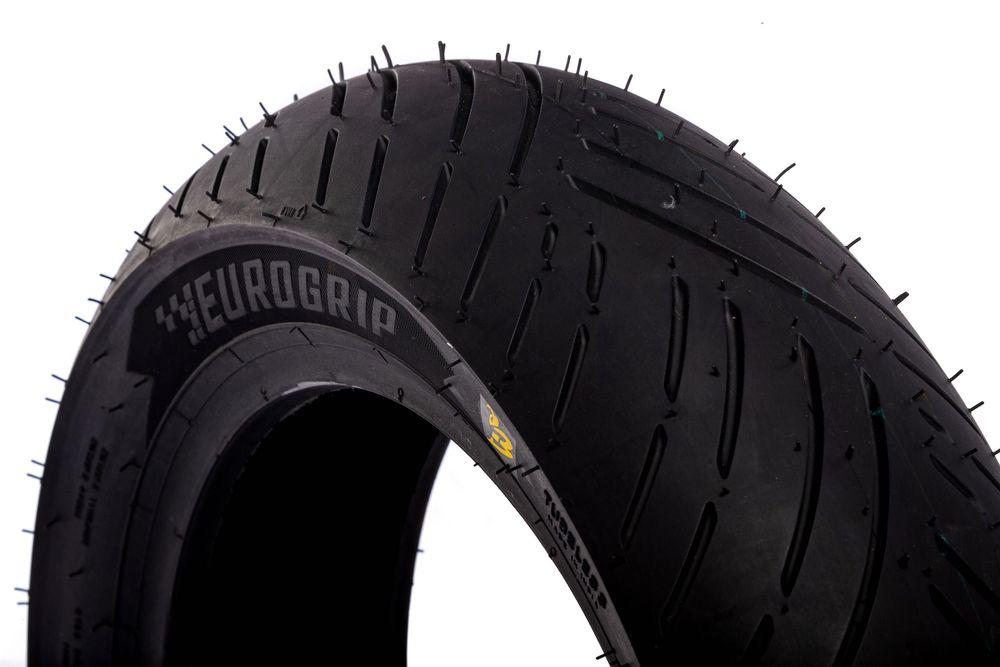
Your bike's mileage drops 15 to 20 per cent when fully loaded and riding at altitude. Factor this into fuel planning. Eurogrip's OpT-PaD technology (Optimized Tread Pattern Design) delivers even footprint pressure distribution, providing excellent grip in both dry and wet conditions throughout your journey.
Rider fatigue causes more long-tour accidents than mechanical failure. Your reaction time degrades significantly after two hours of continuous riding, making scheduled breaks non-negotiable.
The break formula: Stop every 60 to 90 minutes for at least 10 to 15 minutes. Get off the bike completely. Splash water on your eyes, stretch your legs, and drink 300 ml of water even if you do not feel thirsty. At altitudes above 3,000 metres, increase water intake to three to four litres daily.
These long-distance bike riding tips help maintain alertness:
The two-second rule prevents rear-end collisions. Pick a fixed point on the road. If you reach it less than two seconds after the vehicle ahead, you are following too close. On highways, extend this to three to four seconds.
| Situation | Recommended Following Distance |
|---|---|
| Dry highway | 3 to 4 seconds |
| Wet roads | 5 to 6 seconds |
| Behind trucks | 4 to 5 seconds (gravel, dust risk) |
| Night riding | 5+ seconds |
Stay out of truck blind spots. Position yourself where drivers can see you in their wing mirrors. Use indicators three to five seconds before turning or changing lanes. Avoid weaving between traffic since predictability keeps you visible.
Pillion passengers shift your centre of gravity backwards. Increase tyre pressure by 2 to 4 PSI as recommended in your owner's manual. Brake earlier and more gently since stopping distances increase with added weight.
Never exceed your motorcycle's recommended load capacity. A single pair of saddlebags (40 to 60 litres) plus a tank bag (15 to 20 litres) provides ample space for a week-long tour. If you cannot fit everything in that volume, you are overpacking. Keep heavy items low and centred to maintain stability through corners.
Brief your pillion before departing: lean with you through corners, hold your waist or grab rails, and avoid sudden movements. Eurogrip tyres built with RoBusT construction (Roll Balanced Unique Tyre Construction) optimise cornering performance, providing a safer riding experience at various speeds, especially when carrying additional weight.
Indian weather shifts without warning. Monsoon showers turn dry roads slippery within seconds. Wet surfaces hide potholes and significantly reduce tyre traction. Oily patches near junctions become skating rinks in the first minutes of rain.
Essential weather adaptations:
Pack a toolkit containing puncture repair kits (tubeless and tube-type), spare clutch cable, spark plugs, M-seal, foot pump, electrical tape, and zip ties. These items address 80 per cent of roadside failures and fit under your seat.
Your first-aid kit should include bandages, antiseptic, painkillers, ORS sachets, and Diamox for altitude sickness prevention. Carry physical and digital copies of your licence, RC, PUC certificate, and insurance papers in a waterproof pouch.
Download offline maps for every state on your route. Mobile networks disappear in remote areas, and your navigation must work regardless. Consider a backup phone charged with the same maps.
Safe bike ride safety tips are worthless without proper gear. Wear an ISI-certified full-face helmet, armoured riding jacket with back protection, Kevlar pants with knee armour, ankle-covering boots, and full-finger gloves. This combination transforms potential disasters into minor incidents.
Your long-distance journey deserves tyres engineered for the challenge. Visit Eurogrip to explore options designed specifically for Indian road conditions, from smooth highways to unpredictable mountain terrain.
How often should I stop during a long motorcycle ride?
Stop every 60 to 90 minutes for at least 10 to 15 minutes. Get off the bike, hydrate, and stretch. Your reflexes degrade after two hours of continuous riding, so regular breaks are essential for safety.
What is the ideal daily distance for long-distance motorcycle touring in India?
On good highways, 400 to 500 km is the upper limit. In hilly terrain, cap it at 250 to 300 km. On mountain roads with altitude above 3,000 metres, 200 km may take six to eight hours due to challenging conditions.
How do I adjust my riding when carrying a pillion passenger?
Increase tyre pressure by 2 to 4 PSI per your manual's recommendations. Brake earlier and more gradually since stopping distances increase. Brief your pillion to lean with you through corners and avoid sudden movements.
What emergency spares should I carry on a long motorcycle tour?
Pack a puncture repair kit, spare clutch cable, spark plugs, M-seal, foot pump, multi-tool, electrical tape, zip ties, chain lubricant, and spare fuses. These items handle most roadside breakdowns and fit in a small pouch.
Why is tyre pressure especially important for long-distance riding?
Under-inflated tyres generate excess heat, increasing blowout risk. Over-inflated tyres reduce grip. Both issues become more dangerous over extended distances. Check pressure every morning before departure using a handheld gauge.