
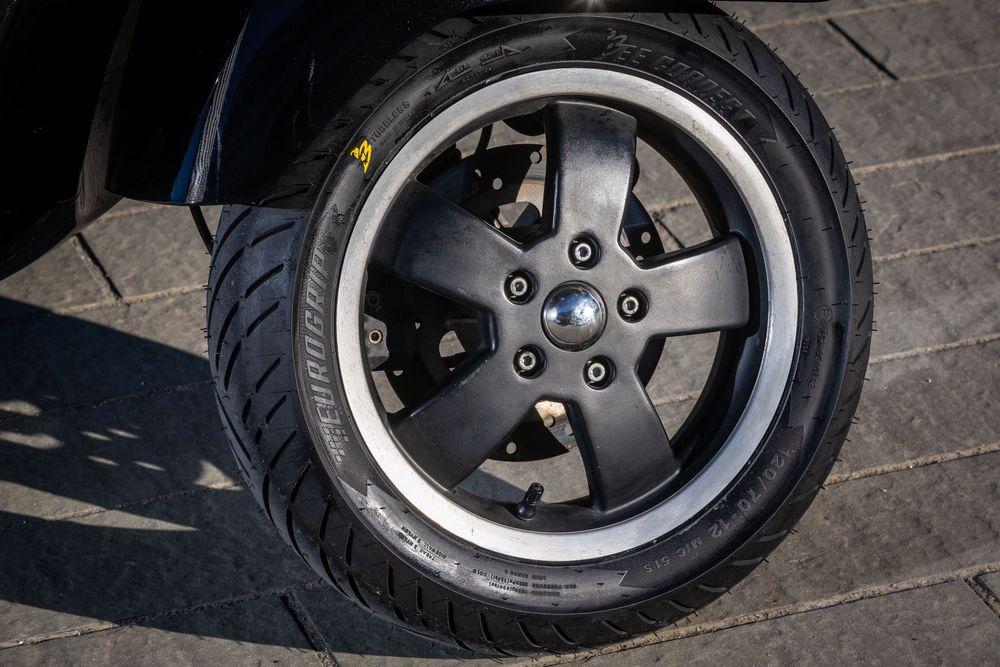
Your scooter tyres should be replaced based on their condition rather than mileage alone. As a general reference, scooter tyres may need replacement around 25,000 to 35,000 km. However, a tyre may require an earlier change if it develops excessive wear or damage.
Your riding routine can also affect tyre life. Frequent braking, rough roads, incorrect tyre pressure and regular city riding can change how quickly the tread wears.
Look for these signs when deciding when to replace scooter tyre:
Tyre rubber also changes as it ages. Once a tyre crosses five years, inspect it carefully for cracks, sidewall damage and other signs of ageing.
What You Notice | What To Do |
Healthy tread with no damage | Continue regular checks |
Uneven or advanced tread wear | Get the tyre inspected |
Cuts, cracks or bulges | Consider replacement promptly |
Frequent punctures | Get professional inspection |
Yes. Low mileage does not automatically mean a tyre is still suitable for continued use. Rubber can gradually harden as the tyre ages.
Age should be considered alongside tread condition, visible damage and riding performance. Checking these factors together gives you a more practical picture of tyre condition.
India’s monsoon can make everyday scooter journeys more demanding. Water on the road reduces the amount of direct contact available between the tyre and road surface. Worn tread can also become less effective at moving water away from the contact patch.
If you are considering the best scooter tyre for wet grip, remember that tyre condition remains important after fitting. Even a tyre designed for wet-road performance needs healthy tread and correct inflation to perform as intended.
Before regular monsoon rides:
Monsoon preparation is also a good opportunity to assess when to replace scooter tyre rather than waiting for worn tyres to become more noticeable on wet roads.
Bee Connect is an all-round scooter tyre developed for varied riding conditions. It is designed to deliver grip, comfort and handling along with enhanced durability and puncture resistance.
The high-flexibility polymer compound is the rubber formulation used in Bee Connect. In simple terms, it allows the tyre material to remain flexible enough to maintain effective contact with the road across wet and dry conditions.
For a scooter rider, this supports traction as road conditions change. This becomes particularly relevant during Indian monsoons, when daily routes can shift between dry stretches, damp surfaces and rain-soaked roads.
This compound is one factor to consider when choosing the best scooter tyre for wet grip for everyday commuting.
Think of the reinforced casing as the tyre’s structural support. It helps the tyre maintain stability as it carries the scooter’s load and deals with forces generated during everyday riding.
A stronger casing also supports durability and tyre life. This is useful on daily routes that can expose your scooter to changing surfaces and frequent urban riding.
Bee Connect Feature | What It Means For Your Ride |
High-flexibility polymer compound | Supports grip across wet and dry roads |
Reinforced casing | Supports stability and durability |
All-round design | Suits varied riding conditions |
Puncture resistance | Adds practicality for regular use |
Tyre care cannot reverse wear, but it can help your tyres perform properly throughout their usable life.
Correct inflation helps promote even tread wear and supports stable handling. Regular inspections also make it easier to judge when to replace scooter tyre before wear becomes excessive.
If budget is part of your replacement decision, scooter tyre costs can vary according to size, pattern and model. A broad price range of around ₹1,300 to ₹1,800 can help you plan your purchase without relying on one fixed price.
Scooter tyre replacement should never depend on mileage alone. Tread condition, tyre age, visible damage, air pressure and changes in riding behaviour can all tell you when your tyres need attention. During India’s monsoon, these checks become even more useful.
Bee Connect combines a high-flexibility polymer compound with a reinforced casing to support grip, stability and durability across varied riding conditions.
When your scooter tyres are due for a change, selecting the correct Eurogrip scooter tyre size and specification is an important part of the decision. At Eurogrip, we create two-wheeler tyres for riders who expect dependable everyday performance. Choose a suitable Eurogrip scooter tyre for your scooter and keep your daily rides ready for the road ahead.
Yes. Front and rear tyres face different loads, so their wear rates and replacement needs can differ.
Yes. A hard impact can cause hidden internal damage, so professional inspection may indicate replacement afterwards.
No. Tyre rubber ages over time, so low mileage does not remove the need for inspection.
Yes. Frequent starts, stops and turns can contribute to wear, especially during regular city commuting conditions.
Yes. Check its age, storage condition and visible condition before fitting it to your scooter safely.