
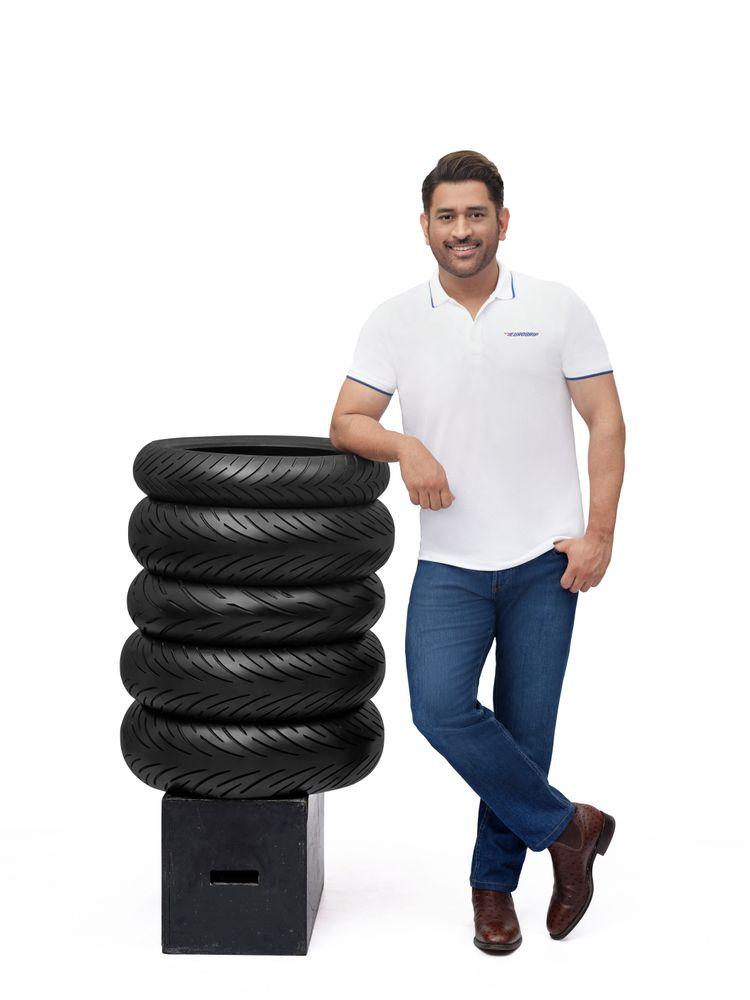
MS Dhoni took to India's first permanent racing circuit aboard a KTM 390 Duke fitted with Eurogrip tyres. The promotional event at Madras International Circuit showcased the brand's flagship motorcycle tyres through high-speed laps, cornering tests, and braking demonstrations. This article breaks down the setup, the circuit, and what the track day reveals about performance tyre technology.
When a cricketer known for finishing matches under pressure trades his bat for handlebars, you pay attention. MS Dhoni appeared at Madras International Circuit recently, pushing Eurogrip tyres through their paces on a KTM 390 Duke.
The 45-year-old, who owns machines like the Confederate Hellcat X132 and Kawasaki Ninja H2, completed high-speed laps in full track gear. For riders curious about what separates promotional events from genuine performance testing, this track day offers real insights.
MS Dhoni arrived at the Madras International Circuit in Irungattukottai, near Chennai, for a promotional event organised by TVS Eurogrip. The 45-year-old cricketer, known for his collection of high-performance motorcycles including a Confederate Hellcat X132, Kawasaki Ninja H2, and Yamaha RD350, wore full racing gear as he navigated the 3.717 km circuit with its 17 challenging turns.
The motorcycle of choice was a KTM 390 Duke, powered by a 349.32cc engine producing 41.5 PS and 33.5 Nm of torque. Videos of Dhoni confidently opening the throttle through corners quickly spread across social media, showcasing both his riding skill and the performance of Eurogrip tyres under demanding conditions.
The Madras International Circuit holds FIA Grade 2 certification, a standard that validates its suitability for professional motorsport. Built in the late 1980s and inaugurated in 1990, this track has hosted countless races and tyre tests over three decades. Its combination of tight hairpins, fast sweepers, and heavy braking zones makes it an ideal proving ground for motorcycle tyres designed for spirited riding.
What makes circuit testing different from road testing? Track surfaces are more abrasive, corner speeds are higher, and braking forces are more intense. A tyre that performs well here demonstrates genuine capability rather than marketing claims.
The event featured the Eurogrip Trailhound STR, a tyre designed with a 90/10 on-road-to-off-road capability ratio. This makes it suitable for riders who spend most of their time on tarmac but occasionally encounter gravel or broken surfaces.
The technical specifications tell an interesting story:
| Feature | Specification |
|---|---|
| Road bias | 90% tarmac, 10% rough surfaces |
| Silica content | 80% for wet grip |
| Construction | Radial with steel belt reinforcement |
| Front size/price | 90/90-21 54V at ₹5,415 |
| Rear size/price | 150/70 R17 69V at ₹15,599 |
The high silica content of 80% deserves attention. Silica helps tyres maintain grip in wet and cold conditions by keeping the rubber compound supple. Traditional carbon-heavy compounds can feel wooden when temperatures drop, but high-silica formulations warm up faster and stay grippy across a wider temperature range.
Eurogrip tyres incorporate what the brand calls quadrazone technology, using multiple compound layers across the tread face. The practical benefit becomes clear during corner entry and exit. A harder centre compound handles straight-line stability and braking forces, while softer shoulder compounds provide grip as you lean through turns.
The radial structure with steel belt reinforcement keeps the tyre profile stable at speed. This matters because tyre distortion under load affects how much rubber actually contacts the road surface. A tyre that squirms or deforms unpredictably makes the bike feel nervous; one that holds its shape gives you confidence to push harder.
Eurogrip's RoBusT (Roll Balanced Unique Tyre Construction) design optimises the carcass for cornering stability. At circuit speeds, this translates to predictable feedback through the handlebars and consistent grip as you transition from braking to turning to acceleration.
Track testing under a celebrity's hands generates attention, but the real question is whether these capabilities matter on your daily commute or weekend ride. The answer depends on how you ride.
Consider the forces involved in emergency braking. At 80 km/h, your front tyre must handle significant load transfer while maintaining grip. The same steel-belt construction that kept Dhoni stable through the Madras International Circuit's braking zones works just as well when you need to stop quickly for an auto-rickshaw.
Corner grip follows similar logic. You may never lean your bike to the angles seen on a racing circuit, but that reserve capacity means greater confidence when you do need to swerve around potholes or take a roundabout with some enthusiasm.
Here is how Eurogrip tyres compare across their performance range:
| Model | Best suited for | Price range | Speed rating |
|---|---|---|---|
| Trailhound STR | Adventure bikes, mixed surfaces | ₹5,415 to ₹15,599 | V (240 km/h) |
| Roadhound | Sport-touring, middleweights | ₹10,600 to ₹13,800 | ZR (240+ km/h) |
| Protorq Extreme | Sporty 150cc to 200cc bikes | Varies by size | W (270 km/h) |
Real-world testing by MotorBeam covered 4,563 km on Roadhound tyres fitted to a KTM 390 Duke. The test included a 1,200 km road trip to Goa with heavy braking, transitions between tarmac and cement roads, and poor internal roads. Only one puncture occurred over eight months, and the tyres showed no bulges or pressure loss despite the punishment.
Autocar India's 2,000 km test on a Triumph Street Triple RS found that motorcycle tyres from Eurogrip cleared water effectively in wet conditions, with grooves dispersing rain efficiently. The reviewer noted the tyres feel slightly wooden on cold starts but perform well once warmed up, typically within the first few kilometres of riding.
For riders seeking performance credentials backed by actual circuit testing and real-world durability data, Eurogrip's range offers compelling value. The Roadhound setup costs around ₹21,000 for a 120/160 combination, fitting almost all 650cc motorcycles in India at prices significantly below European alternatives. Explore the full performance tyre range at Eurogrip's two-wheeler tyre page to find the right fit for your riding style.
What motorcycle did MS Dhoni ride at the Eurogrip event?
Dhoni rode a KTM 390 Duke fitted with Eurogrip Trailhound STR tyres. The motorcycle's 349.32cc engine produces 41.5 PS and 33.5 Nm, making it a suitable platform for demonstrating tyre performance at circuit speeds.
Where is the Madras International Circuit located?
The circuit is located in Irungattukottai, near Chennai. It holds FIA Grade 2 certification and features a 3.717 km layout with 17 turns. Inaugurated in 1990, it was India's first permanent racing circuit.
How long do Eurogrip performance tyres typically last?
Independent testing suggests the Roadhound range lasts between 12,000 to 18,000 kilometres under spirited riding conditions. MotorBeam's 4,563 km test showed minimal wear, supporting Eurogrip's claim of 10,000+ km lifespan.
Are Eurogrip tyres suitable for wet conditions?
Yes. The high silica content of 80% helps maintain grip in wet and cold conditions. Reviewers noted effective water dispersion through the tread grooves, though traction control lights may flash on slippery cement roads.
What is the price difference between Eurogrip and European tyre brands?
A Roadhound front and rear combination costs around ₹21,000 to ₹26,498, significantly less than comparable options from Metzeler or Michelin. Lower production costs allow Eurogrip to offer competitive pricing while maintaining R&D quality through their Italian development centre.