
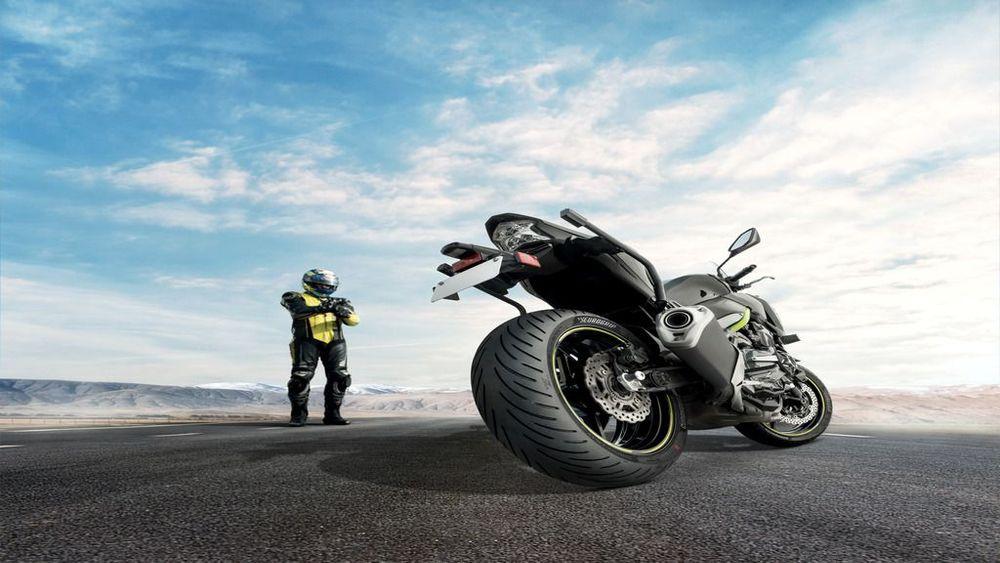
Knowing the life of your tyre in km becomes crucial when you're clocking serious miles on your motorcycle. Every rider faces this question eventually: those black rubber circles beneath you won't last forever. Your safety depends on knowing when to change bike tyre components before they fail you on the road.
Motorcycle tyres face unique challenges on Indian roads. From scorching summer tarmac to monsoon-slicked highways, your tyres endure constant punishment. Unlike car tyres that share load across four contact patches, your bike relies on just two narrow strips of rubber for everything: acceleration, braking, and cornering. This concentrated stress means motorcycle tyres wear differently and require closer attention than their four-wheeled counterparts.
Real-world tyre life in km varies significantly based on multiple factors. Indian riders typically see these mileage ranges:
Rear Tyre Performance:
Front Tyre Durability:
These figures represent typical usage patterns. Your actual tyre life in km depends heavily on riding style, road conditions, and maintenance practices. Aggressive throttle inputs, hard braking, and frequent cornering accelerate wear significantly.
Several factors determine when to change the bike tyre:
| Factor | Impact on Tyre Life |
|---|---|
| Under-inflation | Reduces life by up to 50% |
| Overloading | Accelerates centre wear |
| Aggressive riding | Shortens life by 30-40% |
| Poor roads | Increases damage risk |
| Climate extremes | Hardens rubber faster |
Temperature plays a massive role. Summer heat softens rubber compounds, increasing wear rates. Monsoon conditions demand extra grip, wearing tyres faster as they work harder to maintain traction. Pothole impacts cause internal damage that may not show immediately, but shortens the overall lifespan.
Relying solely on odometer readings misses crucial safety factors. Smart riders monitor multiple indicators to determine when to change bike tyre components safely.
Tread Depth Measurements:
Visual Damage Signs:
Age matters regardless of the tyre life in km achieved. Tyres older than five years require replacement even with adequate tread. Check the DOT code on your sidewall: the last four digits indicate the manufacturer week and year.
Your bike communicates tyre problems through handling changes:
Wet Weather Performance:
Dry Conditions:
Proper care extends tyre life in km significantly. These maintenance practices help you extract maximum value:
Weekly Checks:
Monthly Tasks:
Pressure Management Tips:
| Riding Condition | Pressure Adjustment |
|---|---|
| Solo riding | Manufacturer specification |
| With pillion | Add 2-3 PSI |
| Highway touring | Standard pressure |
| City traffic | Standard pressure |
| Loaded touring | Add 3-4 PSI |
Your riding style directly impacts when to change a bike tyre. Smooth throttle application reduces rear tyre stress. Progressive braking preserves front tyre life. Avoiding aggressive lean angles during daily commutes saves edge wear for when you really need it.
Corner entry speed matters more than exit speed for tyre preservation. Hard acceleration from the apex puts massive stress on the rear tyres. Instead, focus on carrying smooth momentum through turns. This approach not only extends tyre life by km but also improves overall riding skills.
Contemporary tyre technology significantly improves longevity compared to older designs. Multi-compound construction places harder rubber in high-wear zones while maintaining softer compounds where grip matters most.
Eurogrip's DuCT (Dual Tread Compound Technology) exemplifies this approach. The road-contact layer balances mileage with grip, while the second layer bonds securely with reinforcement structures. This dual-compound design helps achieve optimal tyre life in km without sacrificing performance.
Advanced reinforcement technologies like DrBond (Dry Bonding Reinforcement Technology) create stronger nylon-to-rubber adhesion. This enhancement maintains structural integrity throughout the tyre's service life, ensuring consistent performance even as the tread wears down.
Understanding tyre life in km and knowing when to change bike tyre components requires balancing safety, performance, and long-term value.
Economic Considerations:
Safety Priorities:
Performance Requirements:
Recognising when to change bike tyre performance components helps improve riding confidence, safety, and overall road control in varying conditions.
Your motorcycle tyres are your vital link to the road; understanding their km lifespan lets you plan replacements proactively for safety and value. Technologies like Eurogrip's OpT-PaD ensure even pressure distribution for uniform wear, while TriP compound balances grip, mileage, and durability. D²T adds extra rubber volume for longer life.
No one-size-fits-all for tyre changes: your riding style, roads, and maintenance set the timeline. Track performance, note lifespan data, and prioritise safety over squeezing extra km. Upgrade to Eurogrip tyres today for superior performance.